Thoughts: It’s YOUR story….

 Carolyn Baker writes (in these remarks of hers, shared by Andrew Harvey):
The innumerable losses of industrial civilization’s collapse will, over time, bring forth a new story and a new relationship with people, resources, things, and the earth. It will necessitate living as if our very breath is a gift and every person in our lives is an opportunity to pass on the gifts we have received.
— from Collapsing Consciously
One of the more difficult things to do is to surround oneself with positive folk…and that often involves the positive & light-filled move of sticking up for ourselves. I like the way Hay House author & angel therapy expert Doreen Virtue speaks to this…
The following is an excerpt from Doreen’s new book, Assertiveness for Earth Angels.

When someone says or does something that stirs a reaction in you, it’s very important to acknowledge your thoughts and feelings to yourself. Perhaps you notice that your stomach muscles tighten; you perspire; or you become flush with anger, rage, or even embarrassment at the situation.
If at all possible, walk away from the situation, even if you have to excuse yourself to go to the restroom. This moment away helps calm down your physiological reactions. Otherwise, you may act impulsively and say things that you later regret.
While you’re alone, have an honest conversation with yourself. Begin by noticing how you feel physically. Is your heart racing, is your breathing shallow, or are your thoughts explosive? Any of these reactions can show that the other person has triggered anxiety within you.
This anxiety response is also called fight or flight. It’s an instinctual response to danger. When there’s danger, your instincts spur you into either fighting or running away (that is, flight).
While you’re by yourself and meditating, it’s a good idea to pray for guidance, support, and peace. You want to be honest with yourself and with others, but you don’t want to blow situations out of proportion. Nor do you want to engender hard feelings.
Whenever we avoid conflict by keeping our feelings to ourselves, we do ourselves and others a disservice. This is a form of dishonesty and manipulation. We’re trying to control the other person’s reactions by controlling what we tell them.
So when someone asks you if you’re upset and you say that you aren’t when you really are, you’re being controlling. You’re trying to keep them from being angry with you or from starting an argument with you. Or, you’re holding your feelings inside to prevent the other person from seeing that you are hurt.
Now, that doesn’t mean you have to go to the other extreme and bulldoze the other person with the blunt truth.
There’s an in-between way to handle conflict that’s just right and very healthy and honest. After you’ve collected your thoughts and feelings, go to the person and say this magical phrase: “I’d like to clear some things with you.”
This nonthreatening phrase keeps communication open because the other person doesn’t feel accused. Start by taking a deep breath and silently praying for strength and a clear mind. Even though your heart may be racing and you might even be perspiring, know that anytime you do something for the first time, you’ll feel intimidated or afraid. Each time you practice a new behavior, it becomes more natural and easier.
Look the other person in the eye and say to him or her from your heart and without apology: “I really care about our relationship, so I need to share my feelings in order for us to clear them.”
Now, the other person may feel threatened by this and might immediately become defensive or even argumentative. Don’t let this throw you, unless the other person becomes verbally or physically abusive. (Don’t try to negotiate with an abusive person, especially if he or she is intoxicated. If abuse occurs, leave immediately and seek appropriate support or protection.)
In most situations, others will be open to hearing you. During your discussion, it’s vital that you own your feelings. This means: don’t use blaming or shaming words. Even if you do blame them, saying that you do will shut down all further communication.
Use phrases such as I feel, I felt, and to me. This way, you’re not poking and prodding at the other person and inadvertently provoking their defensiveness.
Do your best to keep your cool while talking about and owning your feelings. If you start to cry, let yourself be real. The same with anger: allow yourself to be authentic, but don’t act on this emotion, such as by yelling or calling names. Also, please don’t put yourself down in any way.
Don’t diminish, disparage, or apologize for your feelings…ever! Remember: You have a right to your feelings, even if other people don’t understand or agree with them! Your feelings are your signals of deep truths inside of you. They’re the language of your soul, and they need you to listen to them.
After you’ve talked about your feelings, allow the other person to explain his or her own. There are always two sides to every story. However, notice your gut feelings while you’re listening. If you get an uneasy feeling that the other person is covering his or her tracks or being dishonest with you, then note that—because he or she probably is.
As your assertiveness level grows stronger, you’ll have the courage to say to a person who’s lying to you, “I don’t believe what you’re saying,” or something equivalent. But for now, just notice that you get the feeling that he or she is being dishonest, manipulative, or defensive.
This isn’t the kind of person you want to spend much time with. Those are toxic behavior patterns that permeate all of that individual’s relationships.
If the other person starts blaming you or is defensive, the conversation will go in an unhealthful direction. Blaming is a key symptom of the ego’s fears about being exposed. As long as one or both of you are involved in blaming, nothing will get resolved.

Toxic relationships will pull you down every time. You don’t need to have a toxic relationship when there are so many nontoxic potential friends and partners available. Never believe you have to settle for an unhealthy relationship. You don’t.
Doreen’s 4-Lesson Live Online Course, Assertiveness for Earth Angels starts this week on March 5th. Each person who enrolls will receive a FREE copy of Doreen’s new book and a frameable Certificate of Completion. Register Now »
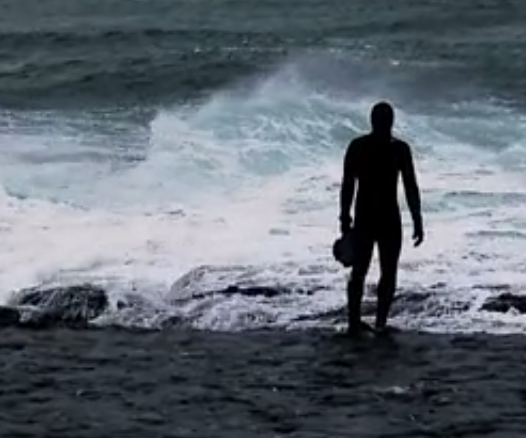
This amazing mini-film is a statement by Micky Smith…and a statement not just by the words (amazing enough) but with what he’s doing with his life as well. His focus isn’t on money & fame & all that, and it’s as well-washed & well-presented as his continued attempts to get a better shot & a better wave…
I’ve watched this perhaps seven times over the past week, showing it to folk, and won’t mind watching & hearing it again. Love it, and am inspired by his picture of living life for today, fully.
Darkside Of The Lens from mickey smith on Vimeo.
What do you do when a friend asks for help? Easy answer.
Keller Laros was diving when a dolphin came & asked for help. I honestly believe this little video will change your day.
Thanks, Keller & Martina (who shot the footage)!
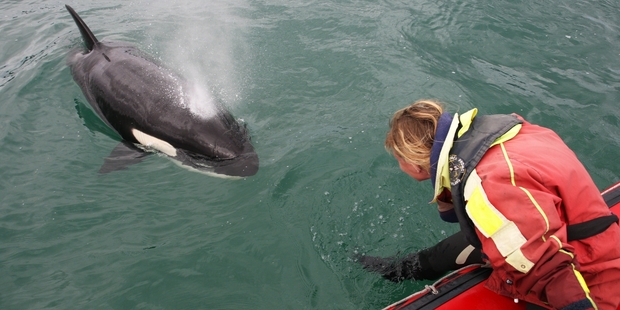
Human/killer whale attacks are rare, which prompts this expert in New Zealand to suggest this event was unfortunate, but more of an accident – here’s more:
An expert on marine animals is skeptical about reports of an orca grabbing a free diver’s catch bag and dragging him underwater until the rope became free.
Whale rescue co-founder, Far North-based Jo Halliday said it was not unheard of for such an incident to occur but she doubted it was a case of “whale attacks man”.
Levi Gavin, who was diving for kina and crayfish two weeks ago at Horahora estuary, on the coast east of Whangarei, said he was dragged beneath the water for about 40 seconds after the orca grabbed the catch bag tied to his right arm.
Mr Gavin described being down to his “last breath” in a death spiral, and trying to relax to conserve his breath as the huge creature dragged him deeper and deeper.
 To Morning
William Blake
O holy virgin! clad in purest white,
Unlock heav’n’s golden gates, and issue forth;
Awake the dawn that sleeps in heaven; let light
Rise from the chambers of the east, and bring
The honey’d dew that cometh on waking day.
O radiant morning, salute the sun
Rous’d like a huntsman to the chase, and with
Thy buskin’d feet appear upon our hills.

The drug store on the corner just changed owners & its name.
I was glad to see they kept most of the workers from before the change.
Really needed some shampoo. Went & asked the woman who was stocking the shelves (who I believe has the biggest smile in the place )where it was, now.
“Oh, we moved it!” And she walked me over to the dish detergent.
“Oh, it must be over here.” Looked at another place, not there.
We walked kind of all over, and then she asked someone else. “Over there,” he pointed, and so it was.
“You must be sorry you asked me,” she laughed.
“No…you make it more fun to look for stuff. Glad I asked you.” And we both left it there.
That’s the way it is, sometimes, hey – it’s really not that important that we hang out with people who know it all. It makes for a better trip (I think) if they care as much as we do about looking for the goal (or whatever we’re striving for), but isn’t it great to have someone along who makes you wish the trip was longer?
We’re all gonna get there, eventually. Even better if we get there together, still smiling.
Love you, and glad we’re on this trip –
Brother Ian
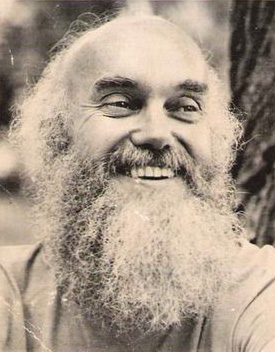
The great fun of traveling is to see things differently, ’round the edges of our path, and sometimes to bring those differences into our own lives. Those changes may be welcomed by our companions, or questioned, or downright rejected. This leads to a new set of challenges, which offer a chance to see it all, even more clearly, but not necessarily without pain or even grief. Here’s more from one of my favourite teachers, Ram Dass (here’s the original posting):
Your understanding of what the universe is all about changes as you proceed further along the path towards enlightenment. As your vantage point or perspective changes, you begin to understand more and more of “how it is.” With this greater understanding comes greater compassion… an acceptance of “how it is”… an ability to see the divine plan in everything, even in your failings and failings of others.
In the course of your journey it is most likely that your day-to-day companions or friends may change. Some may fall away as your interest in the Spirit pulls you from the worldly interest which brought or kept you together, but new friends who share your current interests will appear.
Of course, some of your existing relationships will move easily into this new domain and the relationship will become deeper and calmer… coming to exist in the eternal present.
This transition as traveling companions is a delicate and troubling matter. To find that someone whom you assumed shared all your values and interests over many years has no interest whatsoever in enlightenment or in becoming more conscious or coming into the Spirit is a shock. You want to share this “trip” with them in the same way as you shared others in the past.
That desire to proselytize, to turn him on, to show him, to bring him to the light… is a reflection of your lack of wisdom. For only some people can hear. Only some can awaken in this lifetime. It’s a little like seeing a friend drowning and being unable to catch his hand. You want so badly to do something. But in truth you can only BE… be as straight and as open and as HERE as you can be… and if your friend can hear, he will hear.
And if he cannot hear, he will turn away from you. No blame.
What is important is that you get your house in order at each stage of the journey so that you can proceed. “If some day it be given to you to pass into the inner temple, you must leave no enemies behind.” – de Lubicz
This getting straight not only applies to people but to things as well, such as favorite music, disliked foods, special treats, avoided places, all your toys, etc. Everything must be rerun through your compassion machine. You must revisit, at least in meditation, all your old attachments and re-see them in the light of the Spirit.
As you do, they fall away…unless, of course, the attachment to them is so strong that you are not able yet to re-see them with pure compassion. To stumble in that way on the path merely indicates the work yet to be done. Thus it gives direction to your sadhana, which is to work on those desires that cause you to stumble, by bringing them into the light of mantra or the witness until they fall away on their own.
– Excerpt from Be Here Now by Ram Dass
Posted: http://www.ramdass.org/getting-straight-on-your-path/

Got a picture of two amazing guitarists, sitting down & making it look so easy.
Here’s Chet & Mark, in ’87…with “I’ll see you in my dreams” and “Imagine.”
Love it.

About three months ago, drawing on wisdom passed down to me through a bunch of lifetimes & teachers & events, I posted “The Ten Most Important Things.” The list itself came to me in a vision, and is recorded here in the order & words as they were presented to me, for you.
Have you looked at them? People who have reviewed them tell me there are some that resonate with their faith expression, some that match up with their sense of hope, and some that they have shared with other folks, in other places.
They are posted at the top of this page (Ten Things to Teach & Know), or you can click here to see what they are.
Let me know what you think, my dear traveling companion. I will watch for what you share, in the comments below.

Flying Monk: Young monks begin their service very early in life in their studies in the monastery. This monk was young and energetic and decided to “fly” in his exuberance for life. Bonnie Stewart /National Geographic Traveler Photo Contest (here’s more)
 Over the centuries, Brother Ian has been collecting stories & information & discourses for the purpose of elevating the human condition as needed, dissecting it when necessary, and building the case for hope.
In the spirit of noting that organized crime, organized baseball, organized labour, and organized religion tend to engender controversy & occasional discord, I promise to be neither organized or critical of those who are.